
Ai deepfake examples that reveal how artificial intelligence is transforming digital deception
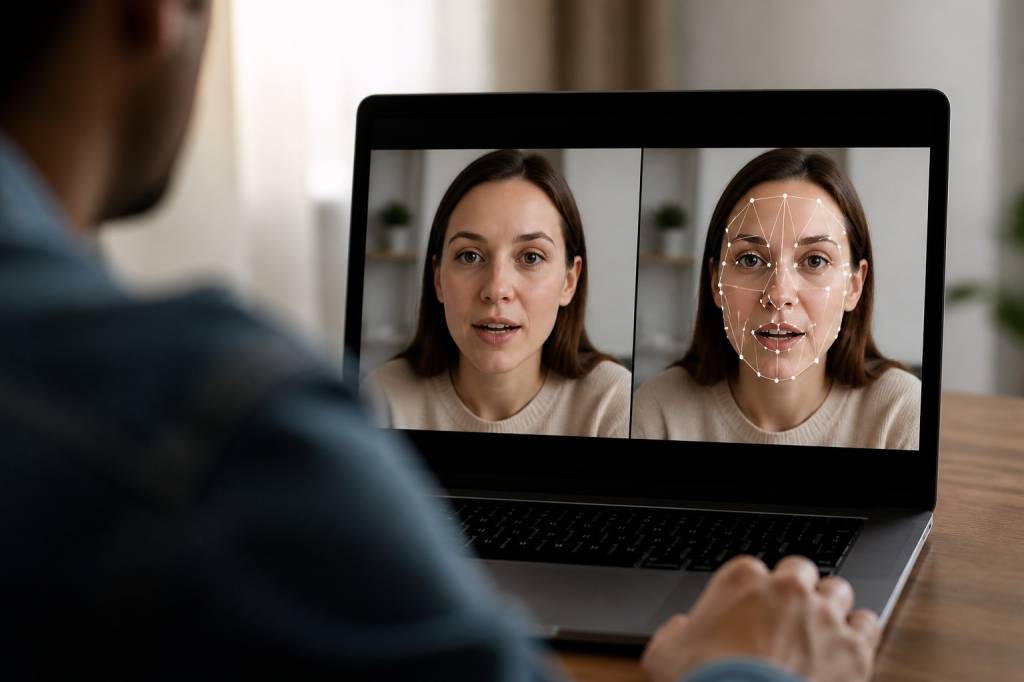
Ai deepfake examples that reveal how artificial intelligence is transforming digital deception
Artificial intelligence has made it easier than ever to create convincing fake images, videos, and audio recordings. A few years ago, producing a believable impersonation required expensive equipment, professional editing skills, and plenty of time. Today, a smartphone, a short voice sample, and the right AI tool can be enough to manufacture a digital deception that reaches thousands of people in minutes.
These creations are commonly known as deepfakes. They can be entertaining when used for satire or visual effects, but they can also damage reputations, manipulate elections, empty bank accounts, and confuse the public during a crisis. The technology is moving quickly, while detection methods and public awareness are struggling to keep pace.
So what do AI deepfake examples reveal about the future of digital trust? More importantly, how can ordinary users recognize when a video, voice message, or image may not be what it appears to be?
What exactly is an AI deepfake?
A deepfake is synthetic media generated or manipulated with artificial intelligence. The term originally referred mainly to face-swapping videos, but it now covers a much broader range of content, including cloned voices, fabricated images, digital avatars, and realistic video generated from text prompts.
Many deepfakes rely on machine-learning models trained on large amounts of visual or audio data. A system can study how a person moves their mouth, blinks, speaks, or expresses emotion. It can then reproduce those characteristics in a new context.
Modern generative AI has lowered the technical barrier considerably. A user does not necessarily need to understand neural networks or video editing. In many cases, the process is as simple as uploading a photograph, entering a script, and selecting a voice or animation style.
That accessibility is the real shift. Deepfakes are no longer limited to film studios, intelligence agencies, or highly skilled online communities. They are becoming consumer tools, and not all consumers have good intentions.
Political deepfakes: when a fake message becomes breaking news
Political figures are among the most common targets because they are photographed, recorded, and quoted constantly. Their public visibility provides AI systems with an enormous amount of training material.
One of the most widely discussed examples appeared in 2022, when a video showed Ukrainian President Volodymyr Zelenskyy apparently telling Ukrainian soldiers to lay down their weapons. The video was manipulated and quickly identified as false, but it demonstrated how a deepfake could be deployed during an active war to create confusion at a critical moment.
The attack did not need to fool every viewer. It only needed to reach enough people, or to be shared quickly enough, to create uncertainty. During a crisis, even a short delay in verifying information can have serious consequences.
Another notable example emerged during the 2023 Slovak parliamentary election. An audio recording circulated online that appeared to feature a political candidate discussing election manipulation and vote buying. The recording was disputed and widely described as AI-generated or manipulated. Because it surfaced shortly before voting, there was little time for fact-checkers and journalists to investigate.
This type of incident exposes a difficult problem: a fake recording can influence public opinion even after it has been debunked. The first version often travels faster than the correction. In the age of algorithmic feeds, being first can matter more than being accurate.
Voice cloning and the rise of AI-powered scams
Audio deepfakes may be even more dangerous than manipulated video because people tend to trust what they hear. A voice coming through a phone call feels personal and immediate. It can trigger an emotional response before the victim has time to think.
In a widely reported case in Hong Kong in 2024, an employee at a multinational company was persuaded to transfer millions of dollars after joining a video call with people who appeared to be senior company executives. The participants were reportedly deepfake recreations, while the fraudsters used the meeting to make the request seem authentic.
Criminals do not always need a sophisticated video conference. A short voice recording taken from a public interview, social media post, or voicemail may be enough to clone someone’s speech. The scammer can then call a relative and claim to be in trouble, contact an employee posing as a manager, or imitate a bank representative.
Typical deepfake voice scams may involve:
- A supposed family emergency requiring an urgent money transfer.
- A fake executive requesting confidential documents or gift cards.
- A cloned customer-service agent asking for account credentials.
- A fabricated law-enforcement call threatening legal action.
- A fake investment adviser promoting a fraudulent cryptocurrency opportunity.
The warning signs are often behavioral rather than technical. The caller creates urgency, discourages verification, requests secrecy, or insists on an unusual payment method. A familiar voice is not proof of identity anymore.
Celebrity endorsements that never happened
Public figures and celebrities are also being used to promote fake products, financial schemes, and questionable medical treatments. AI-generated videos can make it appear that a famous entrepreneur, actor, or news presenter is recommending an investment platform or a miracle supplement.
These advertisements are often distributed through social media, where short videos can be targeted at specific audiences. A fake celebrity endorsement may combine a realistic face, a cloned voice, and a fabricated news-style layout. Add a countdown timer and a promise of guaranteed returns, and the result looks less like a random scam and more like a professional campaign.
Elon Musk has frequently been impersonated in cryptocurrency scams, including deepfake videos designed to promote fake giveaways or investment opportunities. Similar tactics have targeted television presenters and financial experts. The goal is not necessarily to create a perfect digital replica. It is to create enough credibility for a viewer to click a link or send money.
Consumers should be especially cautious when an advertisement promises effortless profits, exclusive access, or risk-free returns. Real experts may discuss financial products, but legitimate offers rarely require immediate payment through cryptocurrency or obscure platforms.
Non-consensual intimate deepfakes
Some of the most harmful AI-generated content involves fabricated intimate images. A person’s face can be placed onto explicit material without consent, often using a publicly available photograph. The victim may never have agreed to create or share such content, yet the image can spread across private groups and public platforms within hours.
Women, public figures, and teenagers are disproportionately targeted, although anyone can become a victim. The damage can include harassment, blackmail, threats, professional consequences, and severe emotional distress.
This form of abuse shows why deepfake discussions cannot focus only on election security or financial fraud. Synthetic media can also become a tool for personal revenge and intimidation. Several countries have introduced laws or proposed legislation to criminalize the creation and distribution of non-consensual intimate deepfakes, but enforcement remains complicated when files are hosted across borders.
Victims should avoid negotiating with blackmailers, preserve evidence, report the content to the platform, and contact local law enforcement or a specialized support organization. Removing every copy can be difficult, but early reporting improves the chances of limiting distribution.
Fake images and fabricated events
Not all deepfakes move. AI-generated images can be just as persuasive, particularly when they are designed to look like breaking news photographs.
In 2023, an AI-generated image appearing to show an explosion near the Pentagon circulated widely online. The image was false, but it was realistic enough to trigger confusion and briefly affect financial markets. The account sharing it appeared credible to some users, and the image was reposted before reliable sources could verify the event.
Other viral examples have included fabricated images of political leaders, celebrities, natural disasters, and public protests. Some contain obvious visual errors, such as distorted hands or unreadable signs. However, newer image-generation systems are improving rapidly, and many traditional clues are becoming less reliable.
Rather than asking only, “Does this image look real?”, users should ask:
- Who first published the image?
- Are reputable news organizations reporting the same event?
- Does the location, weather, and timing match the claim?
- Can the image be found through a reverse-image search?
- Is the account known for reliable reporting or sensational posts?
Context is often more useful than pixels. A technically convincing image can still be attached to a false date, location, or story.
Deepfake fraud inside businesses
Companies are increasingly exposed because modern work depends on video meetings, instant messaging, and digital approval workflows. An attacker who can imitate a chief financial officer or department head may not need to break into the corporate network. Social engineering can be enough.
A deepfake video call can be used to approve a payment, request payroll information, or obtain access to sensitive systems. The attack may begin with stolen email credentials, followed by a carefully staged meeting. Even if the deepfake itself is imperfect, the surrounding details can make the operation convincing.
Businesses can reduce the risk by establishing verification procedures that do not rely solely on voice or video. For example, an unusual payment request should be confirmed through a known phone number or a separate communication channel. Employees should also be encouraged to question urgent instructions without fearing that they are challenging a senior executive.
Useful safeguards include:
- Multi-person approval for large or unusual financial transfers.
- Callback verification using previously trusted contact details.
- Phishing-resistant multi-factor authentication.
- Clear policies for sharing confidential information.
- Regular training based on realistic social-engineering scenarios.
- Logging and review of sensitive account activity.
How to spot a suspicious AI-generated video or voice
Detection is becoming harder, but several clues remain useful. In video, look for unnatural lip synchronization, inconsistent lighting, strange facial movement, blurred teeth, distorted earrings, or a face that appears unusually smooth. Watch the eyes and jaw carefully. AI systems often struggle with subtle movements and natural transitions.
Audio may contain unnatural pauses, robotic emphasis, inconsistent breathing, or an unusual lack of background noise. The speaker may sound emotionally flat even when delivering an emotional message. Still, these clues are not definitive. High-quality systems can avoid many of the classic errors.
The safest approach is to combine technical observation with independent verification:
- Do not share sensational content before checking the source.
- Search for confirmation from multiple reputable outlets.
- Contact the person through a separate, trusted channel.
- Be suspicious of urgent requests involving money or secrets.
- Inspect the account history, not just the individual post.
- Use reverse-image and verification tools when appropriate.
It is also important not to assume that every unusual video is a deepfake. Compression, poor lighting, video filters, and editing can create visual artifacts that have nothing to do with AI. The goal is not to become a perfect forensic analyst. It is to slow down before reacting.
The growing problem of the “liar’s dividend”
Deepfakes create a second danger: genuine recordings can be dismissed as fake. This is sometimes called the “liar’s dividend.” Once people know that convincing synthetic media exists, anyone caught on camera saying something damaging can simply claim that the recording was generated by AI.
This makes verification more important, but it also makes trust more difficult. Authentic evidence may require additional metadata, original files, witness accounts, timestamps, or confirmation from independent sources. In some cases, the public may never achieve absolute certainty.
Platforms, journalists, and technology companies are experimenting with content labels, provenance systems, and digital watermarks. These measures may help identify how a file was created or edited. However, metadata can be removed, watermarks can be attacked, and no single tool can solve the problem on its own.
What comes next for digital trust?
AI deepfakes are not going away. The technology will become cheaper, faster, and more convincing, while detection will become a constant race against new generation methods. Regulation may establish stronger penalties and platform responsibilities, but users will still face suspicious content every day.
The most practical defense is a culture of verification. A familiar face or recognizable voice should no longer be treated as automatic proof. When a message triggers panic, anger, or excitement, that emotional reaction is precisely what attackers want.
Deepfakes are transforming digital deception because they exploit something more powerful than technology: human trust. The best response is not to believe nothing, but to verify important claims before acting. In a world where seeing and hearing are no longer sufficient, a few extra seconds of skepticism may be the most valuable security feature available.