


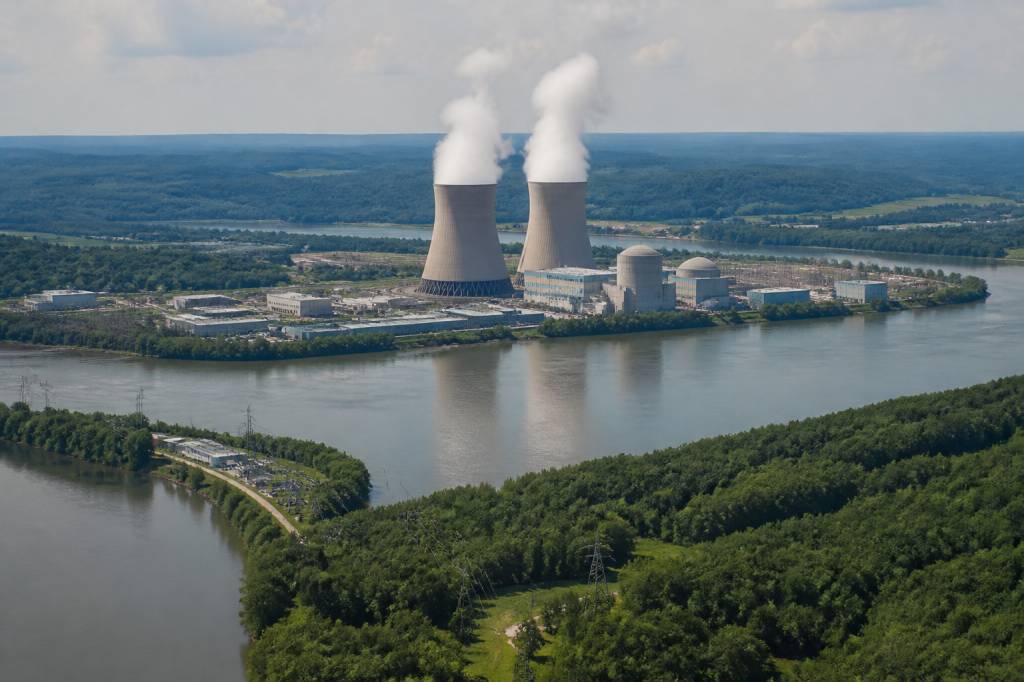
The reopening of Three Mile Island is more than a headline for the energy sector. It is a signal. In a market where power demand is rising faster than many forecasts expected, a nuclear restart can ripple through tech infrastructure, investment decisions, and even the economics of AI. For a blog audience that watches the intersection of innovation and hard infrastructure, this is one of those moments where energy policy stops being abstract and starts affecting real products, real servers, and real budgets.
Three Mile Island has long carried symbolic weight. For decades, the name evoked caution, regulation, and the political sensitivity of nuclear power in the United States. But in 2024 and beyond, the story has shifted. The conversation is no longer just about legacy fears. It is about whether nuclear assets can help stabilize a grid that is being pulled in multiple directions by electrification, cloud computing, AI workloads, and the accelerating demand from data centers. That makes the site reopening relevant far beyond the energy industry.
Why Three Mile Island matters again
The simplest reason is demand. Electricity consumption is rising after years of relative stagnation. A big driver is the digital economy: hyperscale cloud providers, AI model training, blockchain infrastructure in some regions, manufacturing automation, and the broader electrification of transport and industry. When tech firms expand, they do not just buy more servers. They buy more megawatts. And those megawatts need to come from somewhere.
Nuclear power has one major advantage in this context: it provides steady, carbon-free baseload generation. Solar and wind are crucial, but they are intermittent. Batteries help, but they are still expensive at grid scale and don’t solve every problem. If you are running a data center that cannot afford downtime, reliability matters as much as price. That is why many in tech view nuclear not as a nostalgia play, but as a practical tool.
Three Mile Island’s reopening, if successful, is a reminder that old infrastructure can gain new relevance when the market changes. The site’s significance now is not simply historical. It is strategic. The reopening could help demonstrate that nuclear assets, once considered stranded or politically toxic, can be repurposed to support modern power needs.
The tech sector’s growing appetite for power
If you want to understand why this matters to technology companies, look at the numbers around power usage. A single large AI training cluster can require enormous electrical capacity. Add cooling systems, storage arrays, redundancy, and networking equipment, and the load becomes substantial. Now multiply that across multiple campuses, and the scale becomes obvious.
For cloud providers, power availability can be a limiting factor for expansion. It is not always chip supply, and it is not always land. Sometimes the bottleneck is whether a region can actually deliver consistent electricity at the required scale. In some markets, utilities are already warning that new data center requests are straining capacity. That is where nuclear energy reenters the picture.
Here is the practical link: if Three Mile Island and similar facilities can provide dependable power, they help tech companies de-risk expansion. They also help narrow the gap between ambitious AI roadmaps and the physical reality of keeping servers online 24/7.
- Data centers need predictable power pricing to manage operating costs.
- AI workloads can create large, concentrated spikes in energy demand.
- Grid instability can affect uptime, latency, and service reliability.
- Low-carbon power is increasingly important for ESG commitments and customer expectations.
So when a nuclear facility reopens, it is not just an energy story. It becomes part of the infrastructure conversation for every company building compute-intensive products.
What investors are watching in energy markets
Energy markets tend to react quickly to anything that changes supply expectations. A reopening at Three Mile Island can influence sentiment in several ways. First, it suggests that existing nuclear capacity may have a second life, which is bullish for companies involved in plant maintenance, nuclear engineering, fuel services, and grid integration. Second, it reinforces the idea that power scarcity is real, which benefits firms positioned around energy generation and transmission upgrades.
Investors are also watching the broader narrative around nuclear as a “clean firm” energy source. In markets dominated by climate commitments, nuclear offers a rare combination: zero direct emissions and high reliability. That combination is especially appealing to institutional investors who want exposure to infrastructure tied to decarbonization without depending entirely on weather-driven output.
There is also a supply-chain angle. Nuclear restarts require specialized components, engineering talent, safety systems, and regulatory expertise. That creates downstream demand for industrial firms, software providers, sensors, inspection tools, and digital monitoring platforms. In other words, the market impact is not limited to one operator. It spreads across a much wider ecosystem.
And yes, there is volatility. Nuclear projects are not famous for speed. Costs can rise, approvals can drag, and public scrutiny is intense. But markets often reward the direction of travel before they reward the final result. If Three Mile Island signals that more capacity could come back online, energy traders and equity investors will start pricing that possibility in early.
Why AI makes nuclear power look newly attractive
AI has changed the energy discussion in a way few people anticipated even a few years ago. Generative AI, model inference at scale, and enterprise AI deployments are all adding load to the grid. The irony is hard to miss: the technology that promises efficiency and automation also consumes vast amounts of electricity to function.
That is why nuclear is getting fresh attention. AI companies need power that is clean, available, and stable. A cloud region built near a reliable nuclear source is less exposed to intermittency than one depending entirely on renewables plus backup generation. For firms racing to deploy AI products, reliability is not a luxury. It is the foundation.
This also affects competitive dynamics. If one region can guarantee larger power allocations because it has access to nuclear generation, it can attract more data center investment. That can influence where AI infrastructure clusters develop over the next decade. In practical terms, power becomes a location strategy. The old question was “Where is the talent?” The new question is increasingly “Where is the megawatt?”
There is a very real possibility that nuclear restarts like Three Mile Island could indirectly shape AI geography, startup valuations, and cloud pricing. That is not a dramatic claim. It is just how infrastructure works. When compute demand rises faster than energy supply, the companies with better access to power move first.
The market signal for cloud, chips, and infrastructure hardware
The reopening also has implications beyond utilities and generators. Hardware companies should care too. More data center construction means more demand for servers, networking gear, cooling systems, transformers, switchgear, and power management equipment. The energy story is therefore tied to the hardware story, and investors have started to notice.
Semiconductor demand can also be affected indirectly. When cloud providers expand capacity, they order more accelerators, CPUs, memory, and storage. If power availability improves in certain regions, it can unlock additional server deployments. That creates a knock-on effect for chip vendors and the broader infrastructure stack.
Even companies in the software layer are not immune. SaaS vendors, AI application startups, and platform providers all depend on underlying infrastructure. If the market for reliable power tightens, operating costs rise. If nuclear restarts help ease that pressure, the economics improve across the stack.
In a sense, Three Mile Island is a reminder that the digital economy still depends on very physical things: turbines, grid interconnects, cooling water, permits, engineers, and maintenance crews. Software may be eating the world, but it still needs electricity to chew.
Policy, regulation, and the public perception problem
No discussion of nuclear reopening is complete without acknowledging the regulatory and public trust challenges. Three Mile Island is a famous name for a reason, and that legacy matters. Even if the technical and economic case for reopening is strong, regulators will scrutinize safety, emergency planning, environmental impact, and operational readiness.
Public perception is just as important. Nuclear energy has long suffered from a reputation problem: high caution, high cost, and the memory of past accidents. Yet the conversation is changing, especially as climate goals collide with rising demand. People are beginning to ask a more pragmatic question: can we afford not to use every reliable low-carbon source available?
That shift in public opinion may be gradual, but it is measurable. Younger voters, energy analysts, and many tech leaders are increasingly open to nuclear when it is framed as part of a balanced clean-energy mix. The debate is less ideological than it used to be. It is becoming operational.
Still, reopening a site like Three Mile Island will not be treated casually. Expect long timelines, extensive oversight, and heavy scrutiny from both advocates and critics. That is not a bug in the system. It is the system.
What this means for energy traders and tech executives
For energy traders, the reopening can influence expectations around future supply, regional pricing, and nuclear sector valuations. A successful restart strengthens the narrative that firm power assets are back in favor. It could also affect natural gas sentiment in some markets, especially where nuclear output helps offset peaker demand.
For tech executives, the lesson is more operational. Power planning is now a board-level issue. AI strategy, cloud expansion, and data center siting all depend on energy availability. Companies that once treated electricity as a background utility are now negotiating it like a strategic input.
That means a few concrete things:
- Long-term power contracts are becoming more valuable.
- Location decisions for data centers need to factor in grid capacity, not just tax incentives.
- Partnerships with utilities and energy developers are becoming part of growth strategy.
- Sustainability teams and infrastructure teams need to work much more closely together.
The most forward-looking firms are already thinking this way. They are not waiting for a power shortage to become a crisis. They are building around it now.
Could Three Mile Island shape the next wave of innovation?
Possibly more than people expect. Nuclear restarts can accelerate a broader shift toward mixed-energy systems that support next-generation computing. If the facility proves viable, it may encourage additional investment in existing plants, advanced monitoring systems, and digital tools for plant operations. That opens opportunities for AI-driven predictive maintenance, industrial IoT, cybersecurity, and grid optimization software.
Think about the irony here: AI may be one of the reasons nuclear is making a comeback, and AI may also help operate these facilities more efficiently. Smart sensors, anomaly detection, digital twins, and automated inspection systems all have a role to play in keeping complex infrastructure safe and productive.
This is where the story gets especially interesting for a tech audience. The reopening is not just about turning on a reactor. It is about reimagining how legacy energy assets can be integrated with modern digital systems. That is a classic high-tech transition: old hardware, new software, and a market that suddenly sees the value in both.
The bigger picture
Three Mile Island reopening is not a standalone event. It is a sign that energy strategy is being rewritten under pressure from digital growth, climate goals, and infrastructure constraints. The tech sector needs more power. The energy sector needs new demand anchors. And investors want assets that can bridge both worlds.
If the reopening succeeds, it could strengthen the case for nuclear as a practical partner to AI, cloud computing, and data center expansion. If it struggles, it will still have revealed something important: the market is willing to revisit old assumptions when new demand becomes impossible to ignore.
In tech, timing is everything. In energy, reliability is everything. Three Mile Island sits at the intersection of both.